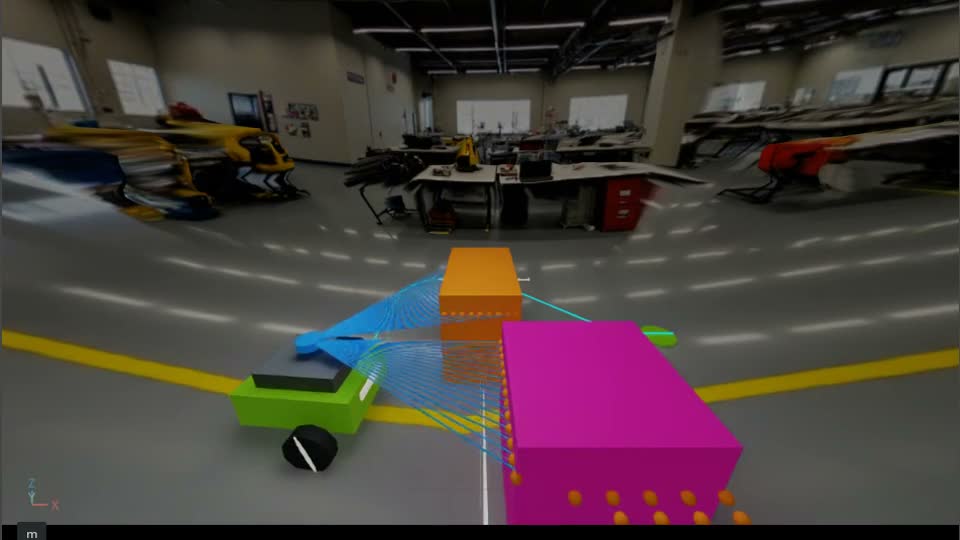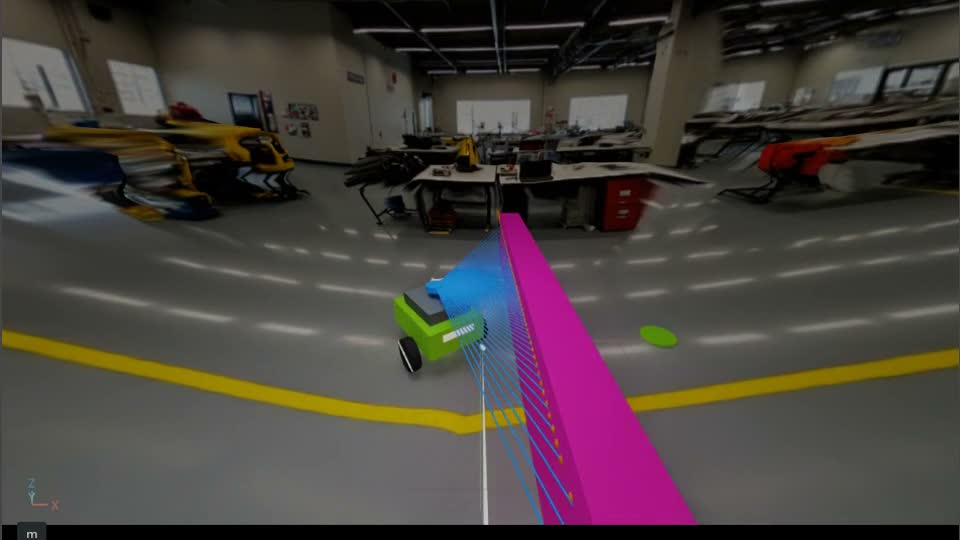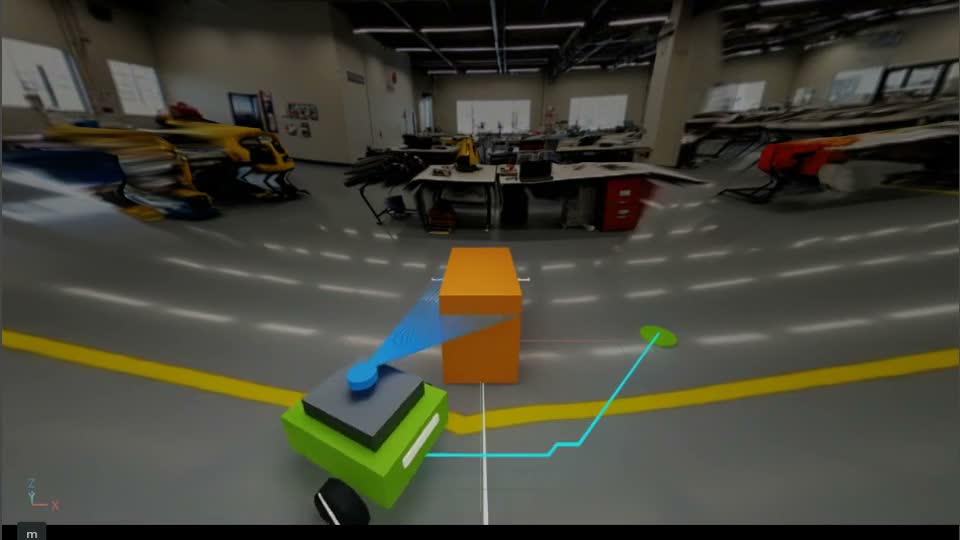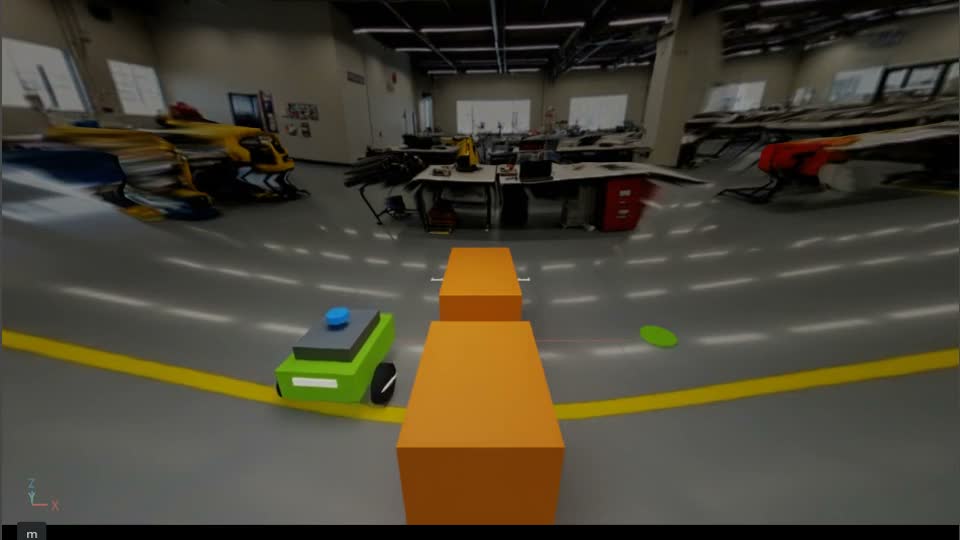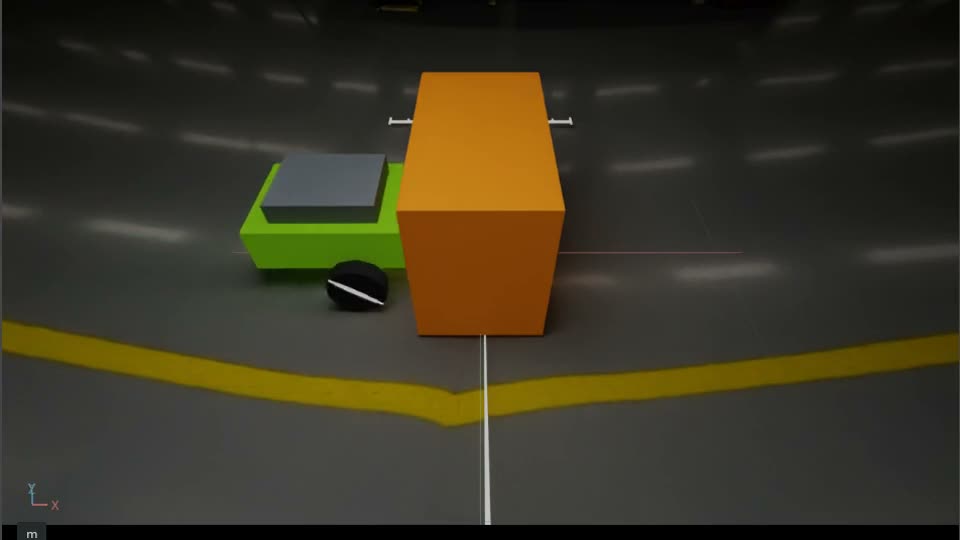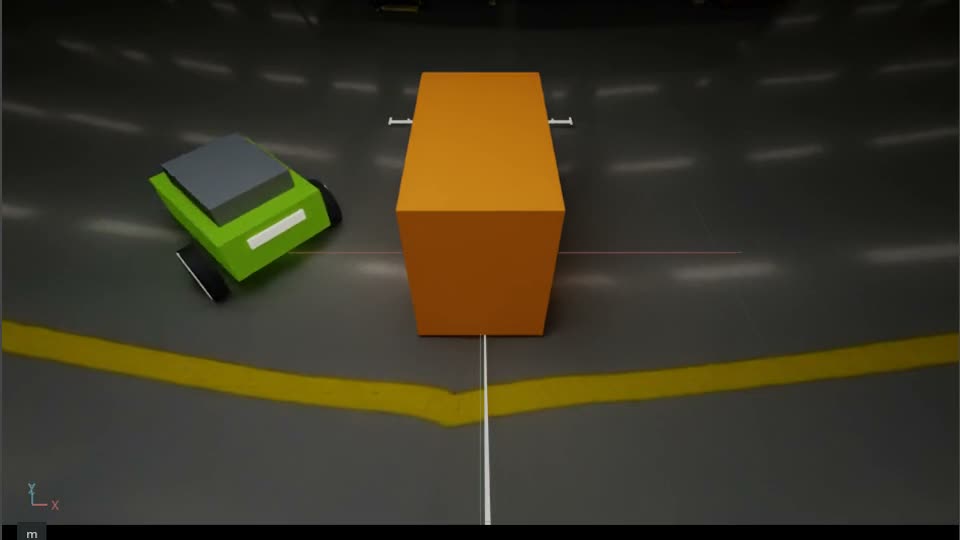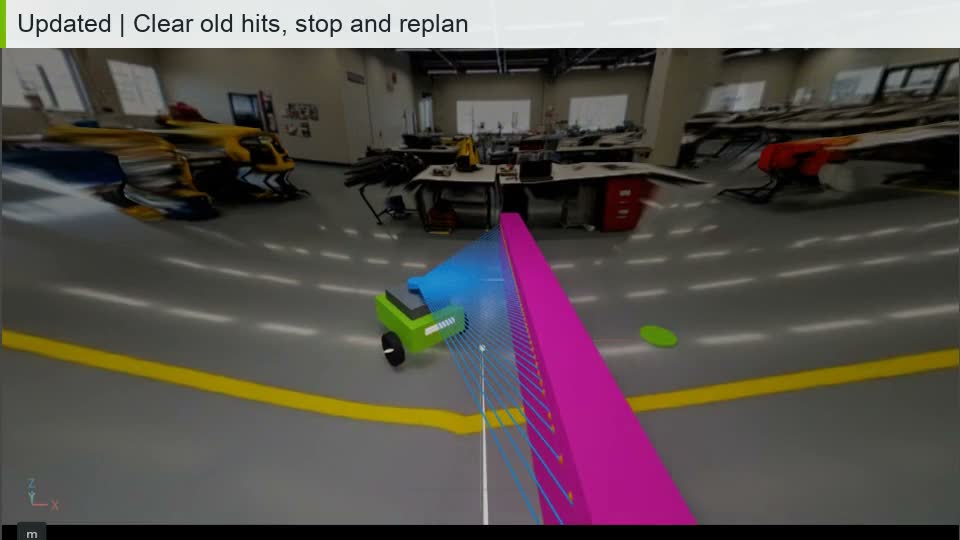
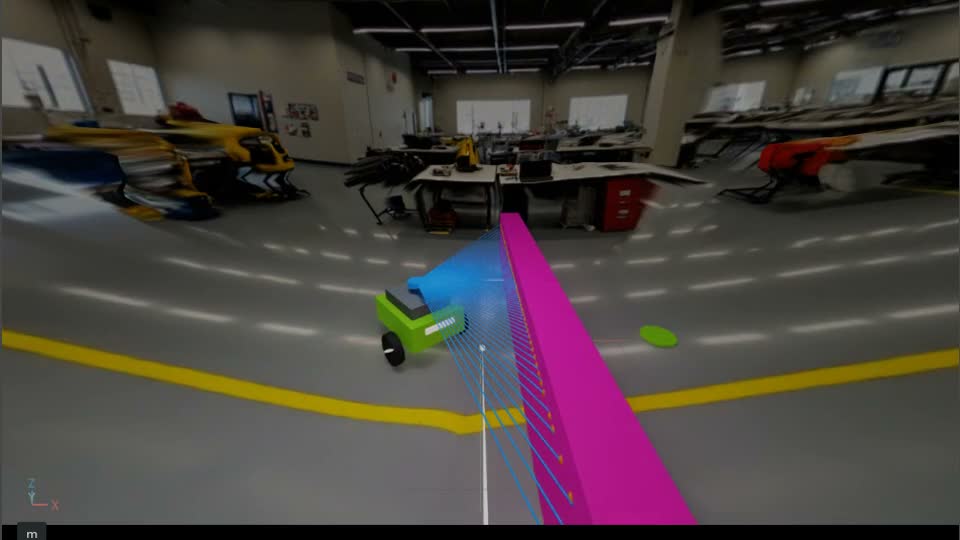
Stop for a closing gate, then continue
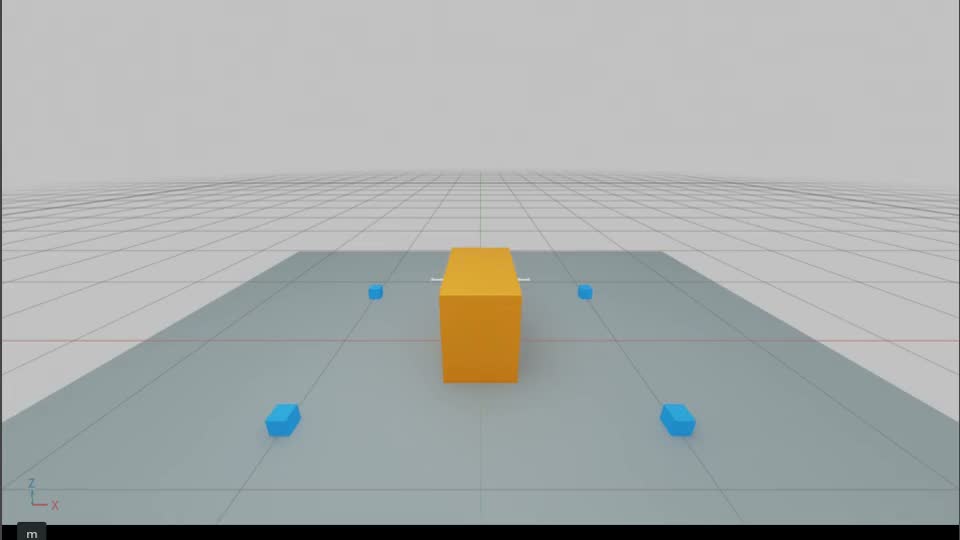
A moving physical collider blocks the passage. The robot waits with zero wheel commands and resumes from new observations when a path opens.
Explore robot policies, physics, 3D Gaussian worlds, generated indoor scenes and ego-camera driving. These experiments use NVIDIA GPU tools, CARLA and Blender; each recording links to code and checks.
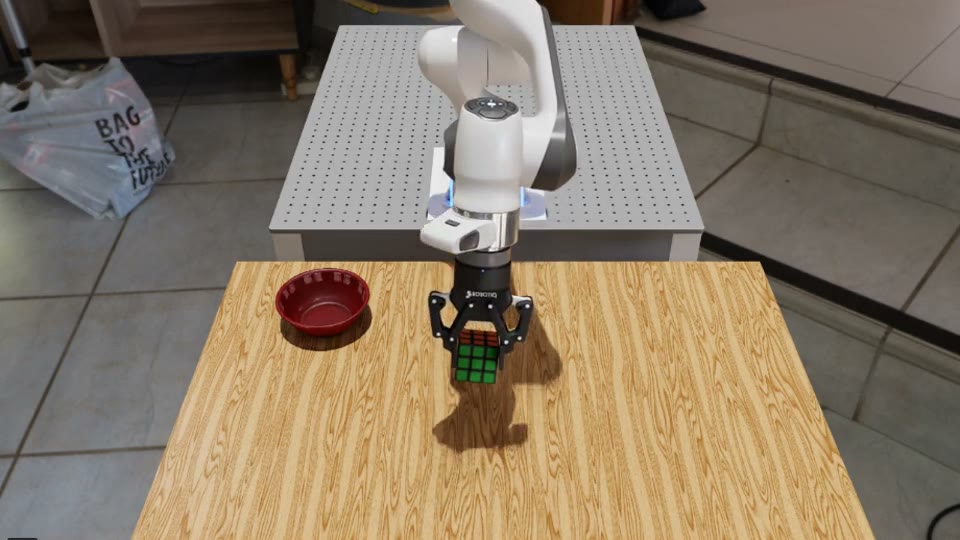
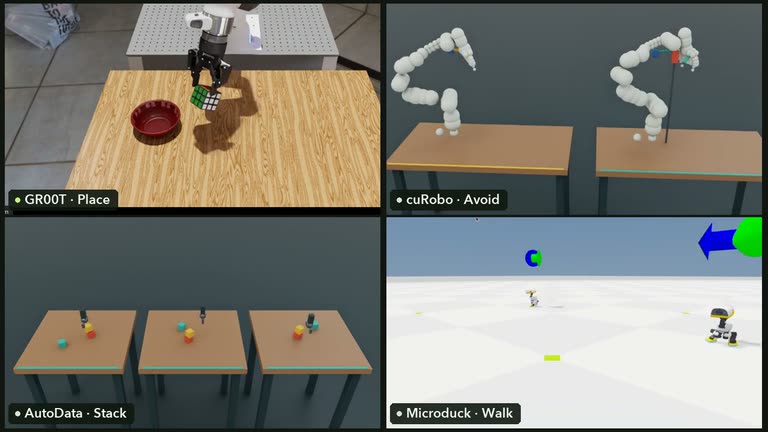
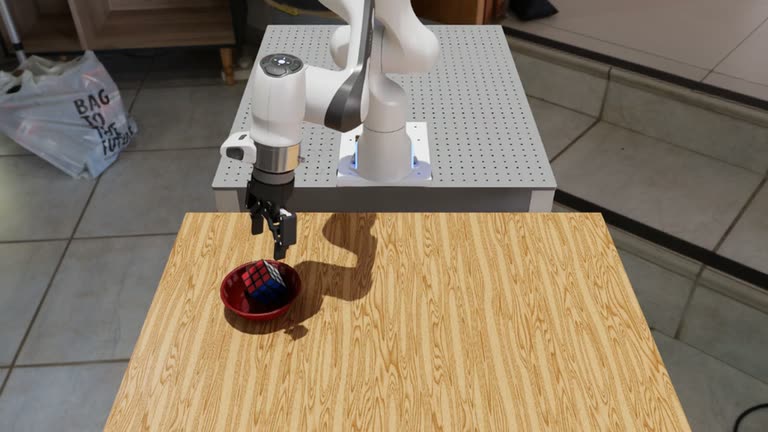
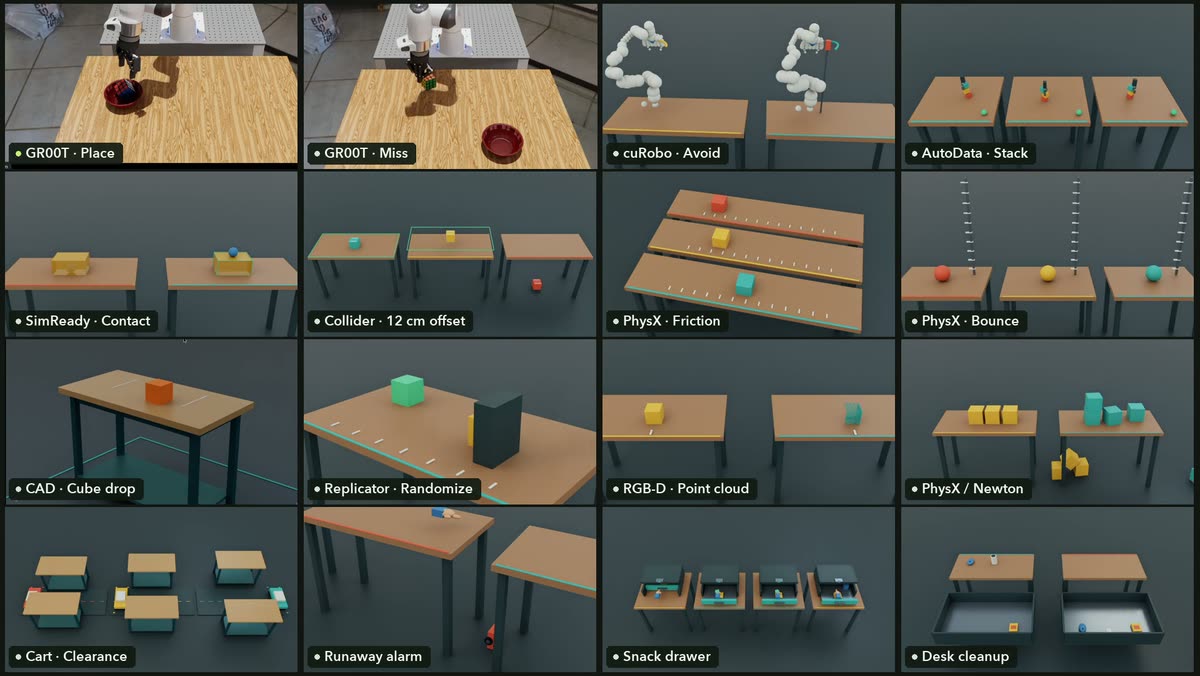
Watch the top-left tile for the successful GR00T placement. The next tile shows the earlier attempt that lost the cube.
Try the labSilent footage. Some shots are sped up or slowed down. Replay, motion planning, and live simulation are labeled below.
A moving physical collider blocks the passage. The robot waits with zero wheel commands and resumes from new observations when a path opens.
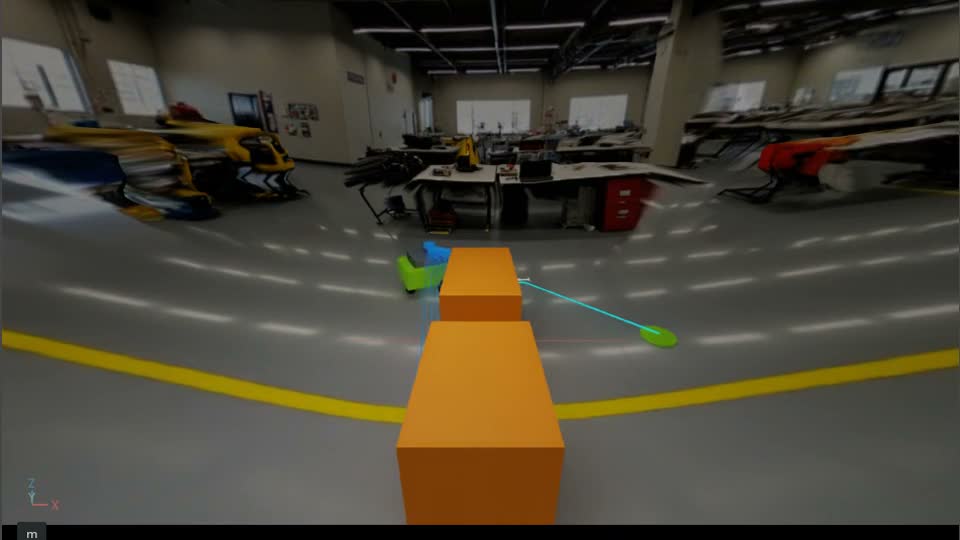
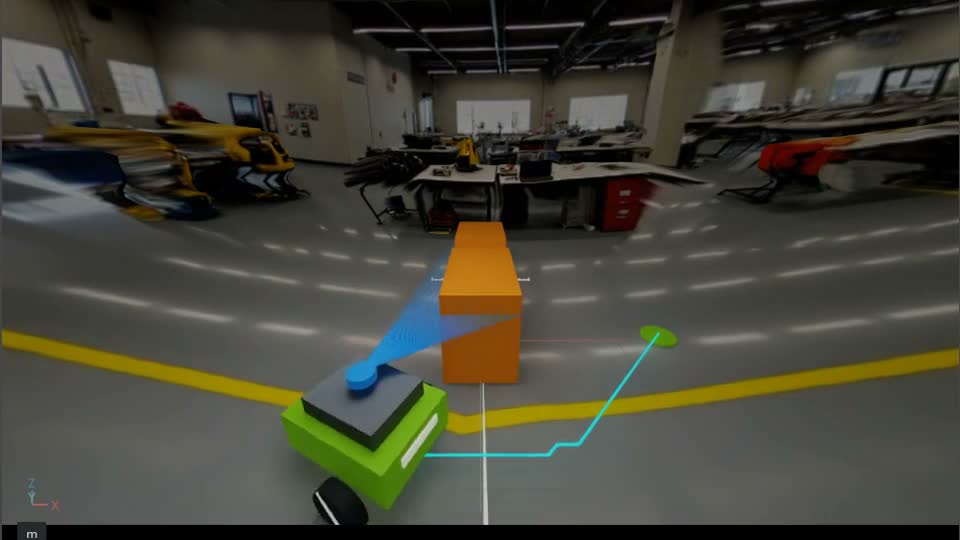
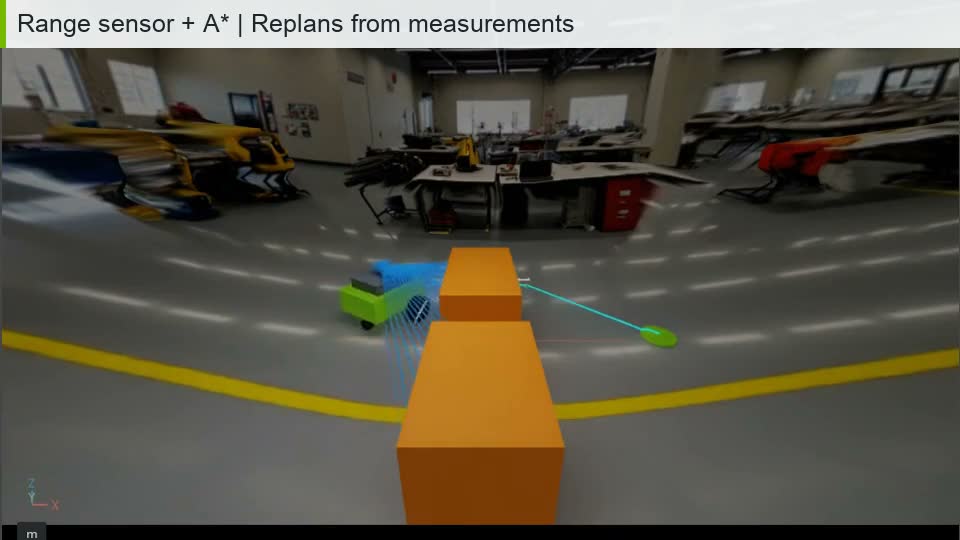
The initial sensor-generated route goes below the static crate. A box enters this passage, the robot brakes, and a later plan takes it around the other side.
The same range sensor and moving gate, using the unchanged previous permanent-map Navigator. The robot stops and still has no route after the gate withdraws.
The controller receives only ranges, ego pose and a goal. The cyan line is recomputed online; it is not a supplied waypoint list.
Move the added box to the opposite side without changing the planner. The measured route changes with the scan.
The original central obstacle is detected from range hits. The planner builds its first route from an empty obstacle map.
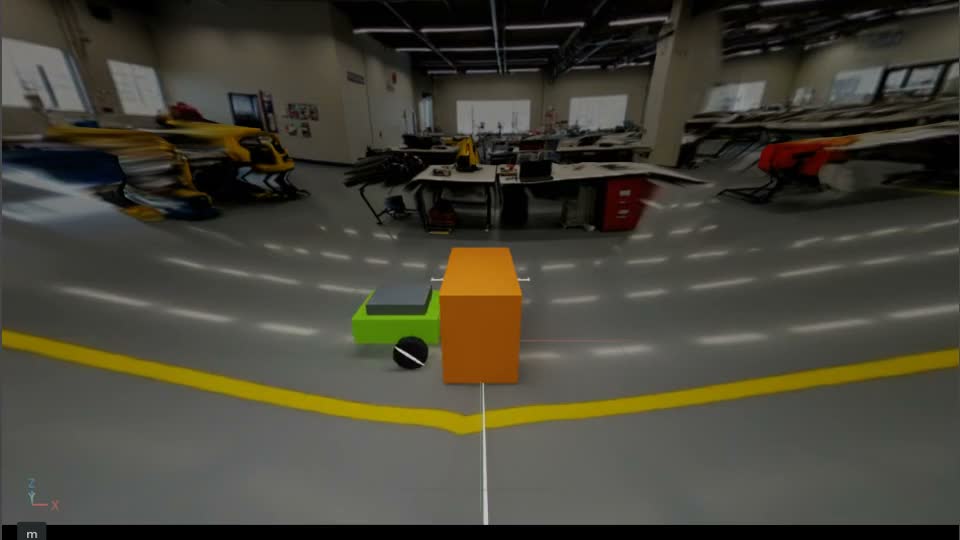
The previous waypoint list is unchanged and ignores range data. Live contacts stop the robot at the added box; the goal is not reached.
The same physical robot receives equal wheel-speed targets and stops against the crate. Contact events and measured poses are saved.
An independent run follows the detour directly. The camera is closer and the generated-room emission is lower than in the main overview. No crate contact was reported.
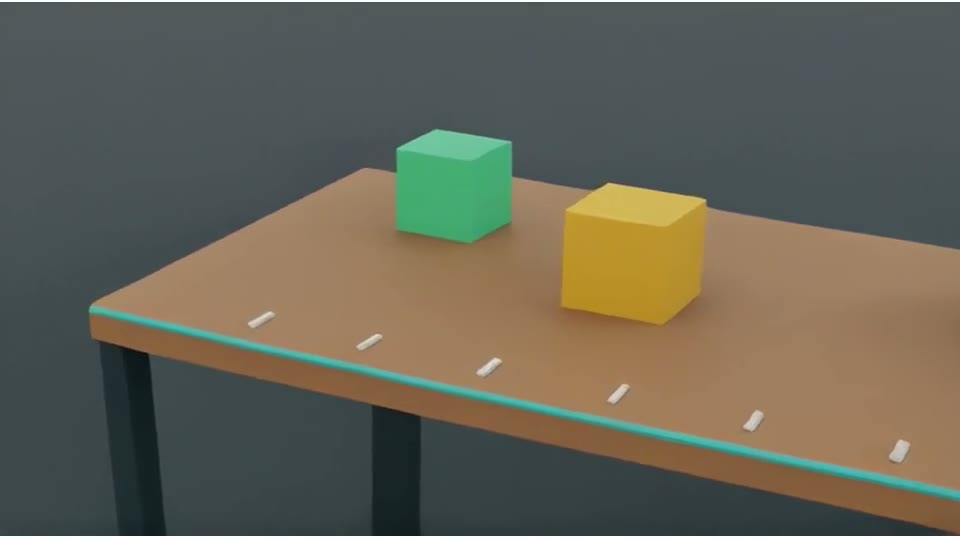
Four 10 cm cubes drop onto the explicit floor. Compare their saved heights with the no-collider and generated-mesh tests in the lab.
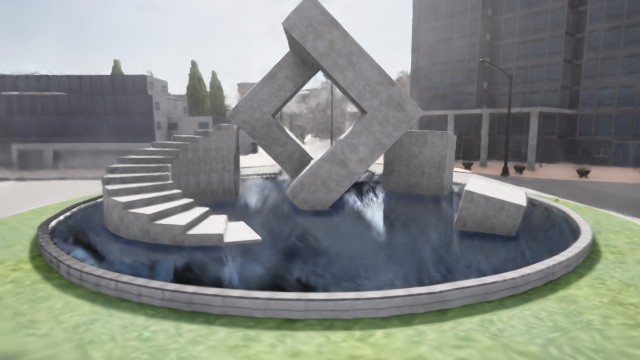
Actual model inference on an RTX GPU, followed by a translated camera path rendered from the Gaussian PLY. Distance is inferred and not metric ground truth.
Actual model inference on an RTX GPU, followed by a translated camera path rendered from the Gaussian PLY. Distance is inferred and not metric ground truth.
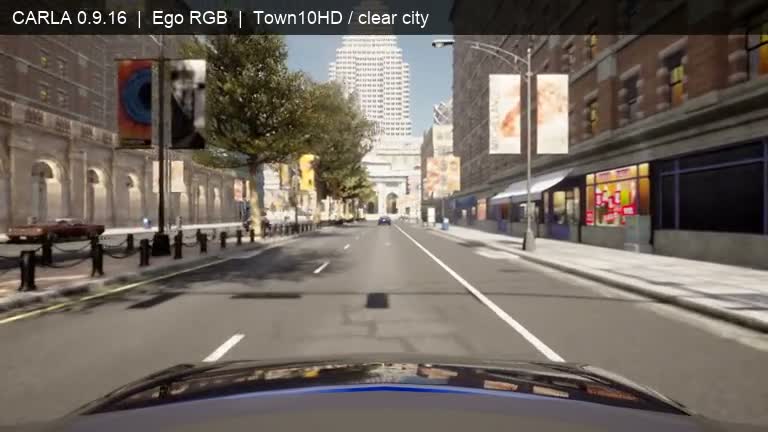
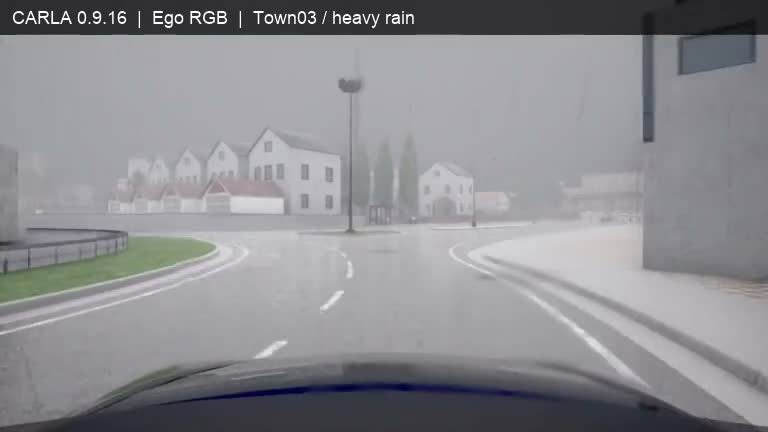
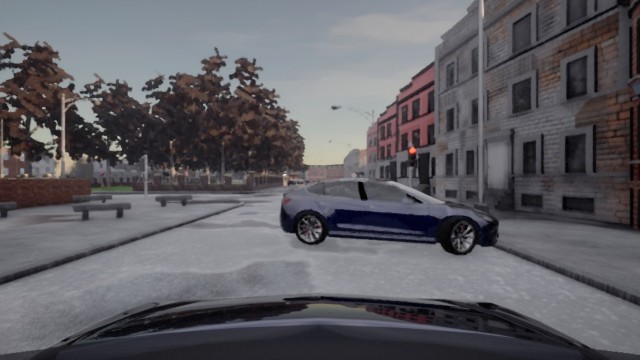
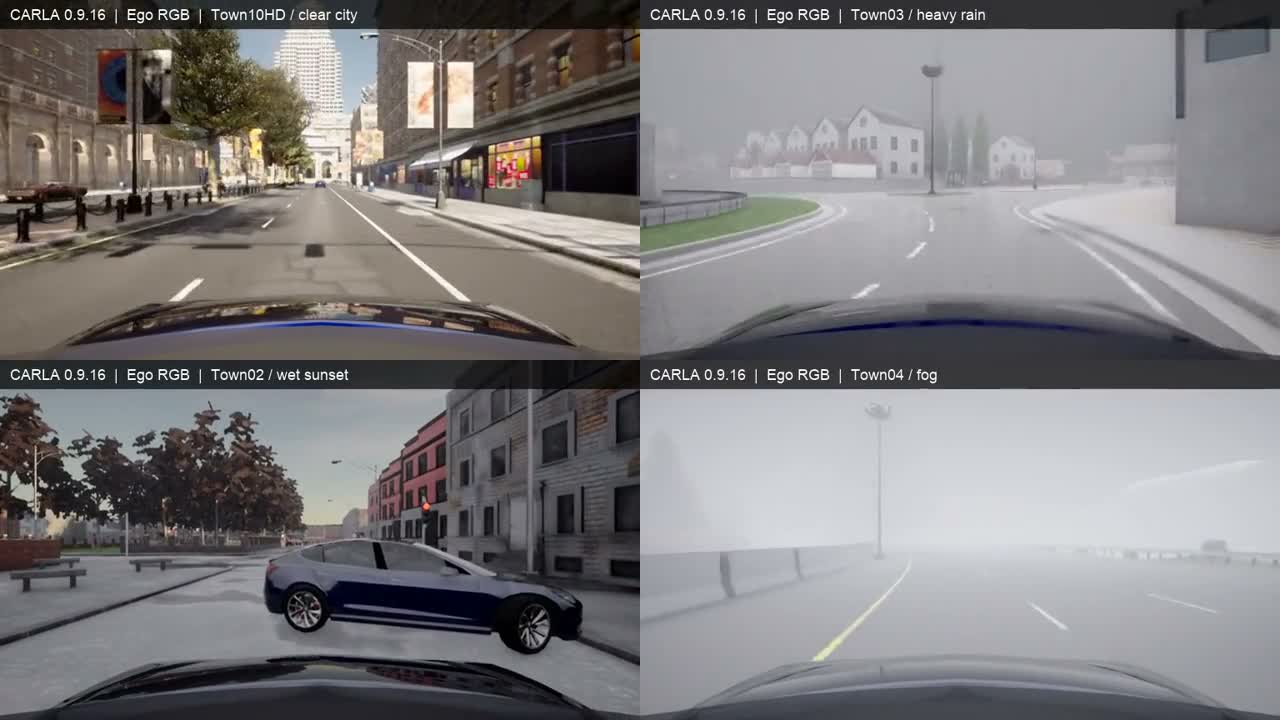
Original-speed, on-board RGB sensor capture in CARLA. Open the lab for setup, camera placement, and per-frame records.
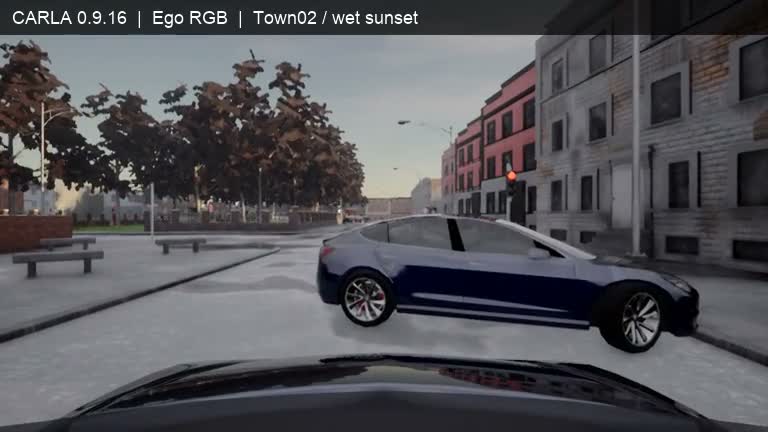
Original-speed, on-board RGB sensor capture in CARLA. Open the lab for setup, camera placement, and per-frame records.
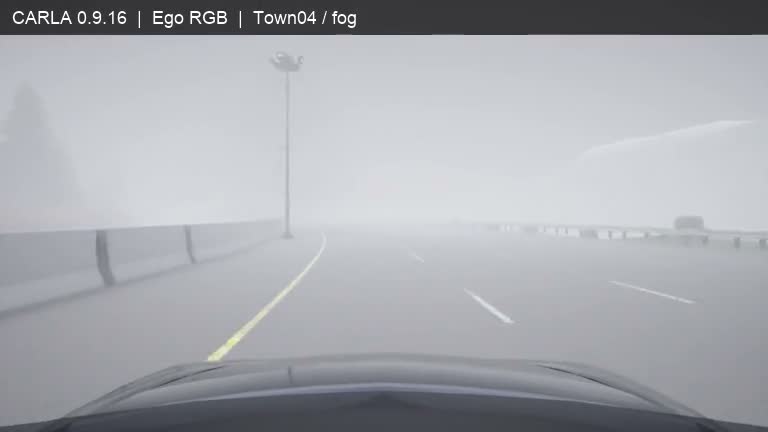
Original-speed, on-board RGB sensor capture in CARLA. Open the lab for setup, camera placement, and per-frame records.
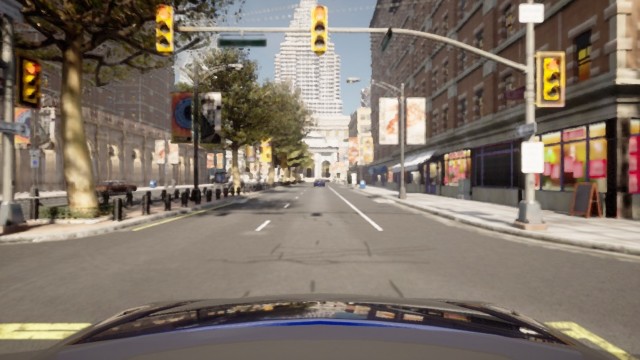
Original-speed, on-board RGB sensor capture in CARLA. Open the lab for setup, camera placement, and per-frame records.
SHARP predicts 3D Gaussians from our CARLA image. fVDB renders nearby views. Research-only model weights; no complete 360° scene.
SHARP predicts 3D Gaussians from our CARLA image. fVDB renders nearby views. Research-only model weights; no complete 360° scene.
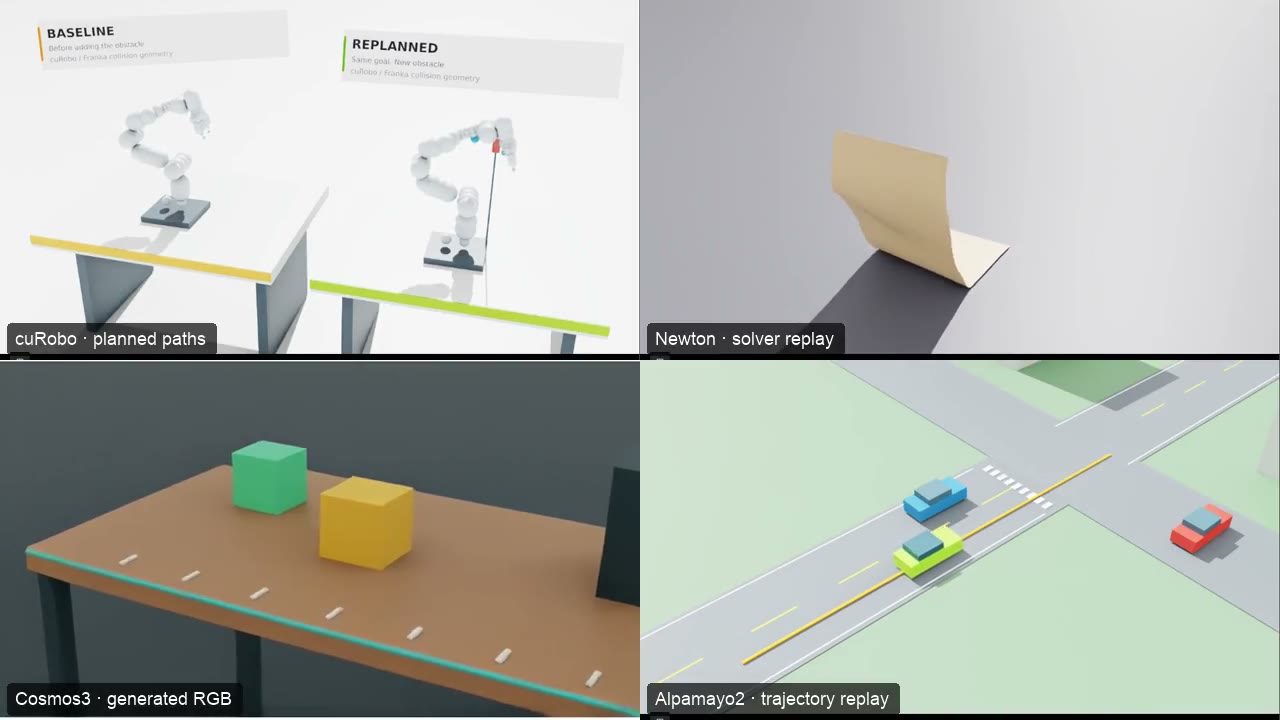
Clockwise from the top left: cuRobo paths, Newton solver replay, Alpamayo trajectory replay, and Cosmos generated RGB. Short takes loop; the Newton tile changes examples.
November 19 live GR00T run, shown at 2× speed. Both new trials lifted the cube but neither placed it in the bowl.
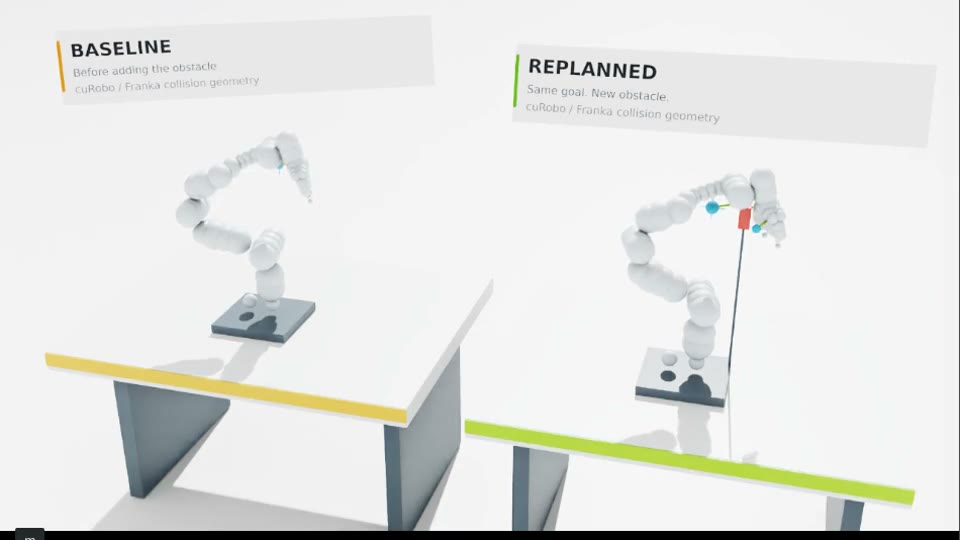
November 19 GPU replan. Isaac Sim replays the calculated arm collision geometry; sampled sphere clearance is about 2.17 mm.
GR00T places the cube, cuRobo plans around an obstacle, AutoData replays generated demonstrations, and a trained Microduck policy walks in Newton.
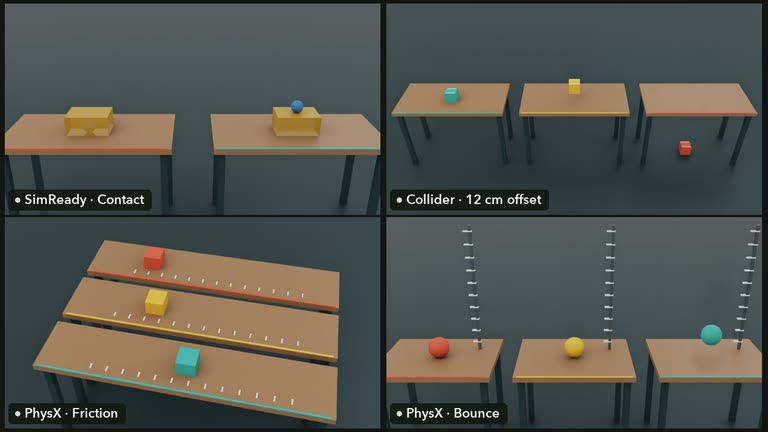
Colliders change where objects stop. Friction changes how far they slide, and restitution changes how high they bounce.
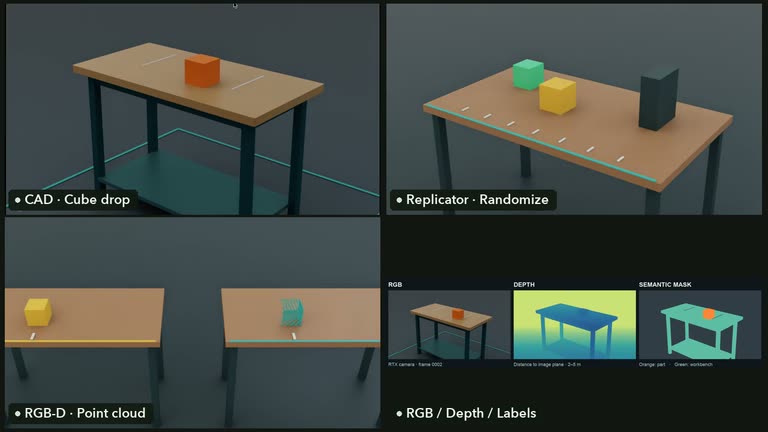
Open a CAD workbench, vary the camera scene in Replicator, and inspect RGB, depth, labels, and a reconstructed point cloud.
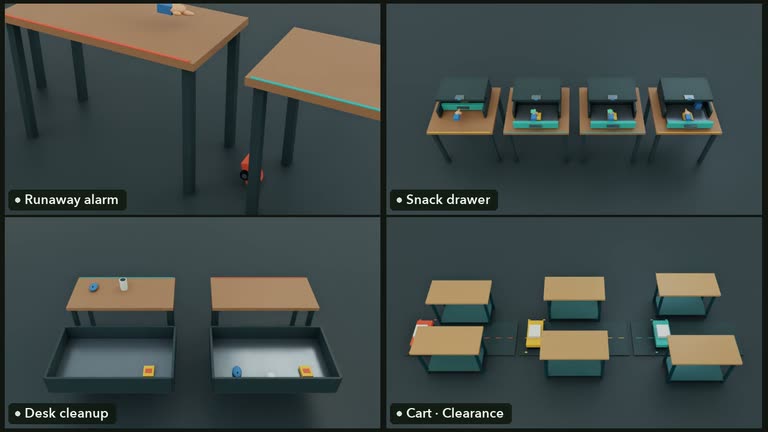
An alarm rolls away, a snack drawer responds to a card, a cleanup rule puts a mouse in the bin, and a cart tests aisle widths.
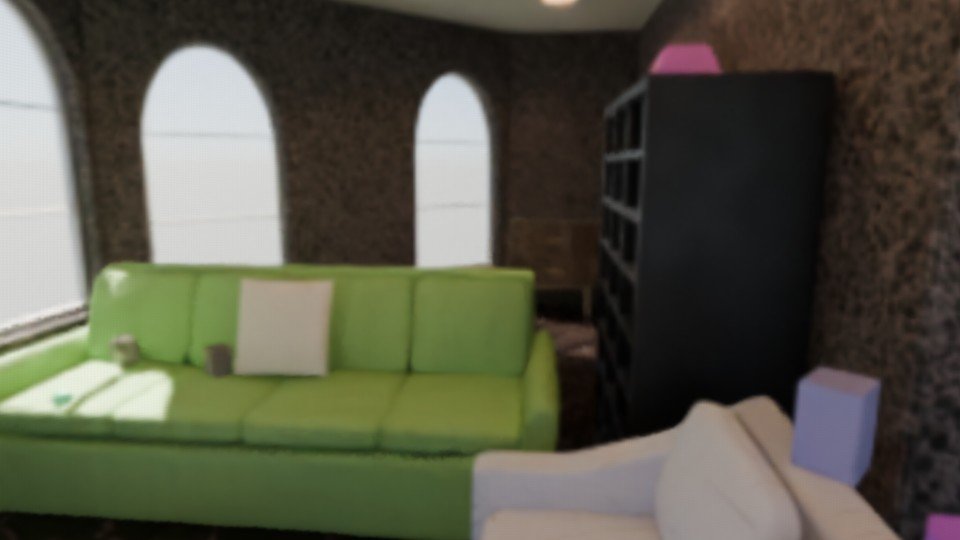
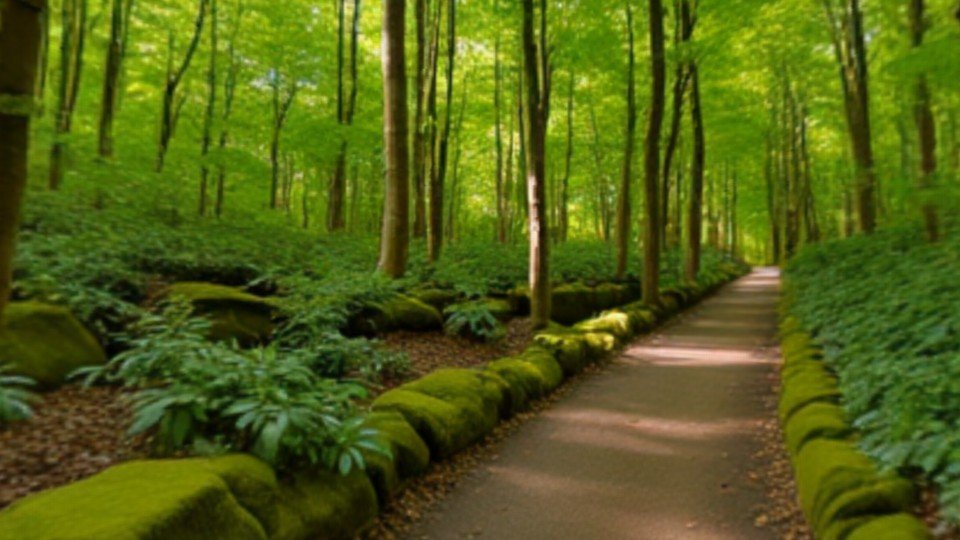
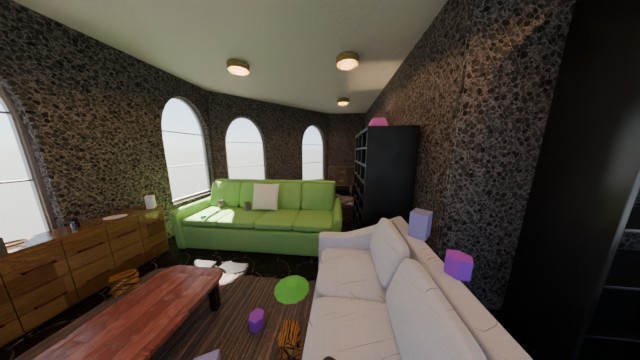
WorldGen creates a robotics lab, a forest trail and an expanded living room. Watch translated 3D camera views, then load the generated scene in your browser.
A gate closes during driving and reopens. The old permanent map still blocks the robot; fresh range observations let the new controller wait, clear the map and continue. Actual Isaac Sim GUI recordings at 1×.
A new box blocks the old route. An actual Physics Raycast Sensor feeds an occupancy grid and A* planner, and the same robot chooses the other side. Native Isaac Sim GUI footage at 1× speed.
A generated laboratory becomes an Isaac Sim 6.2 scene. Watch an articulated AMR meet a crate, reverse and follow waypoints around it. The recovery is scripted; contacts and motion are live PhysX.
CARLA camera views become an fVDB radiance field. Move the viewpoint in the browser, or watch the full model rendered along a new camera path.
Actual CARLA ego cameras: clear city, heavy rain, wet sunset, and fog. Traffic Manager is a rule-based driver; these are sensor captures, not AI policy results.
Infinigen generates a furnished house and plans a camera tour. Blender Cycles renders the geometry; this is procedural generation, not neural world-model inference.
A real Cosmos camera-conditioned generation, then an Alpamayo prediction replay in Isaac Sim. Separate model experiments on our own scenes.
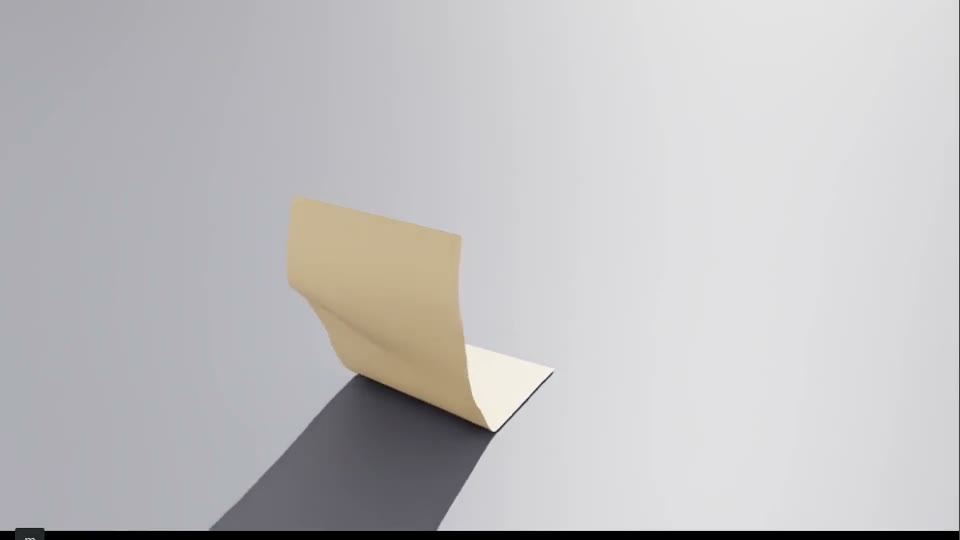
Newton computes XPBD cloth, VBD cloth, and twisting cables. Isaac Sim displays the saved solver states.
Watch the gripper hold, carry, open, and leave the cube resting in the bowl.
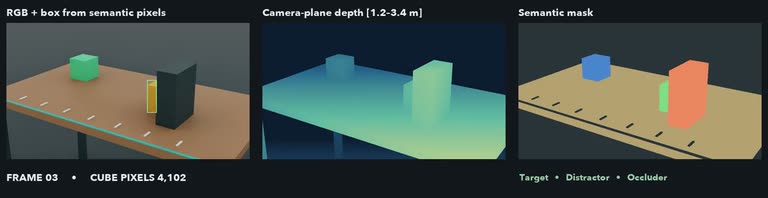
Inspect RGB, camera-plane depth, and semantic masks from 12 captured frames.
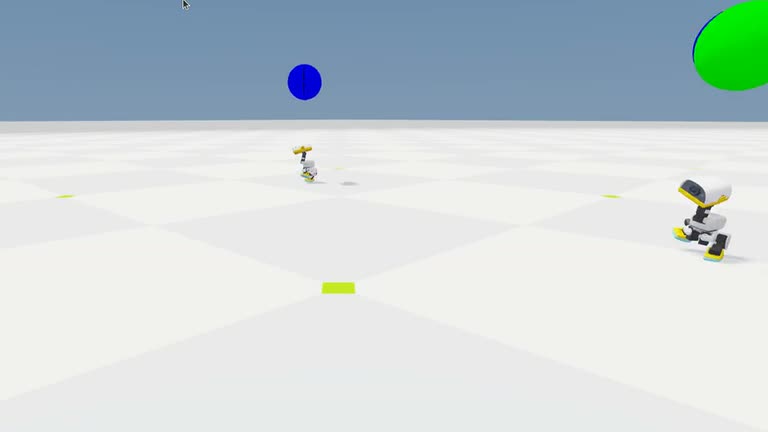
A walking policy trained in Isaac Lab drives the simulated robot.
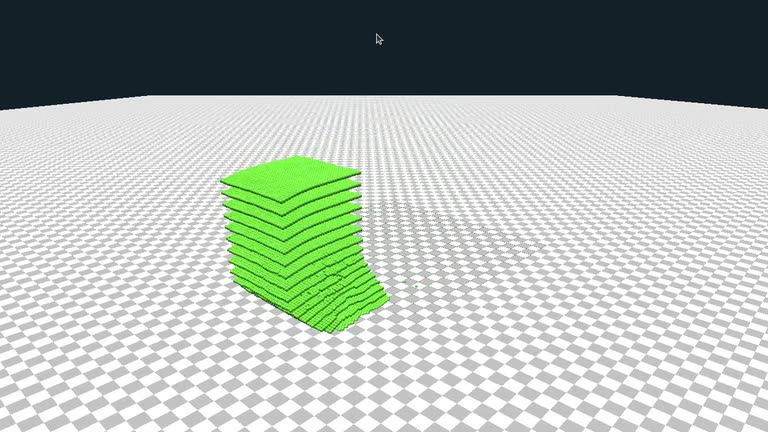
Warp computes 65,536 interacting particles on the GPU. The viewer draws one in four.